
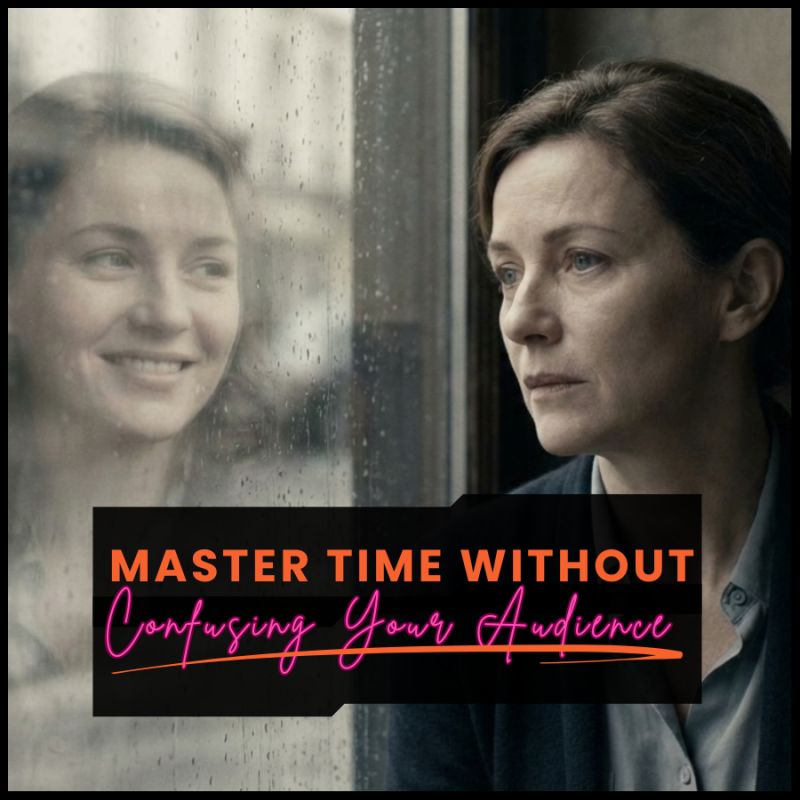
Flashbacks and time jumps are some of the most powerful—and dangerous—tools in cinematic storytelling. When used well, they deepen character, heighten emotion, and create mystery. When used poorly, they confuse audiences and derail momentum.
For indie filmmakers especially, nonlinear storytelling isn’t about being clever—it’s about being intentional. Every jump in time must earn its place in the narrative.
The key question isn’t can you use flashbacks or time jumps—it’s why you’re using them.
Here are five innovative, story-driven ways to structure flashbacks and time shifts that enhance clarity, emotion, and cinematic impact.
1. Anchor Every Time Jump to Emotional Need

The most effective flashbacks aren’t about exposition—they’re about emotion.
Instead of asking:
“What information does the audience need?”
Ask:
“What emotional truth does the character need to confront right now?”
Why it works
A flashback becomes powerful when it answers an internal question the character is wrestling with in the present moment.
Examples of emotional triggers:
- A sound that recalls trauma
- A location tied to regret
- A choice that mirrors a past failure
- A relationship echoing an old wound
When flashbacks are emotionally motivated, the audience instinctively understands why we’ve gone back in time—no explanation required.
🎬 Pro Tip:
If you can remove a flashback without changing the emotional trajectory of the scene, it doesn’t belong.
2. Let the Present-Day Scene Flow Into the Past
One of the most elegant ways to handle time jumps is to avoid hard cuts altogether.
Instead of stopping the story to “go back,” let the present moment morph into the past.
Techniques that work beautifully:
- Match cuts (a door closing → same door years earlier)
- Sound bridges (dialogue or ambience carries across time)
- Visual echoes (same framing, different time period)
- Movement continuity (a character sits down → younger version stands up)
Why it works
The audience experiences time as fluid, not fragmented. Emotion stays intact, and the transition feels cinematic rather than mechanical.
This approach works especially well in:
- Memory-driven narratives
- Trauma-based stories
- Character studies
- Psychological dramas
🔁 Rule of thumb:
If the transition feels seamless, the audience stops thinking about structure—and stays inside the story.
3. Use Flashbacks to Reveal, Not Explain
The most common mistake with flashbacks is using them as information dumps.
Innovative storytelling uses flashbacks to reveal new meaning, not repeat what the audience already suspects.
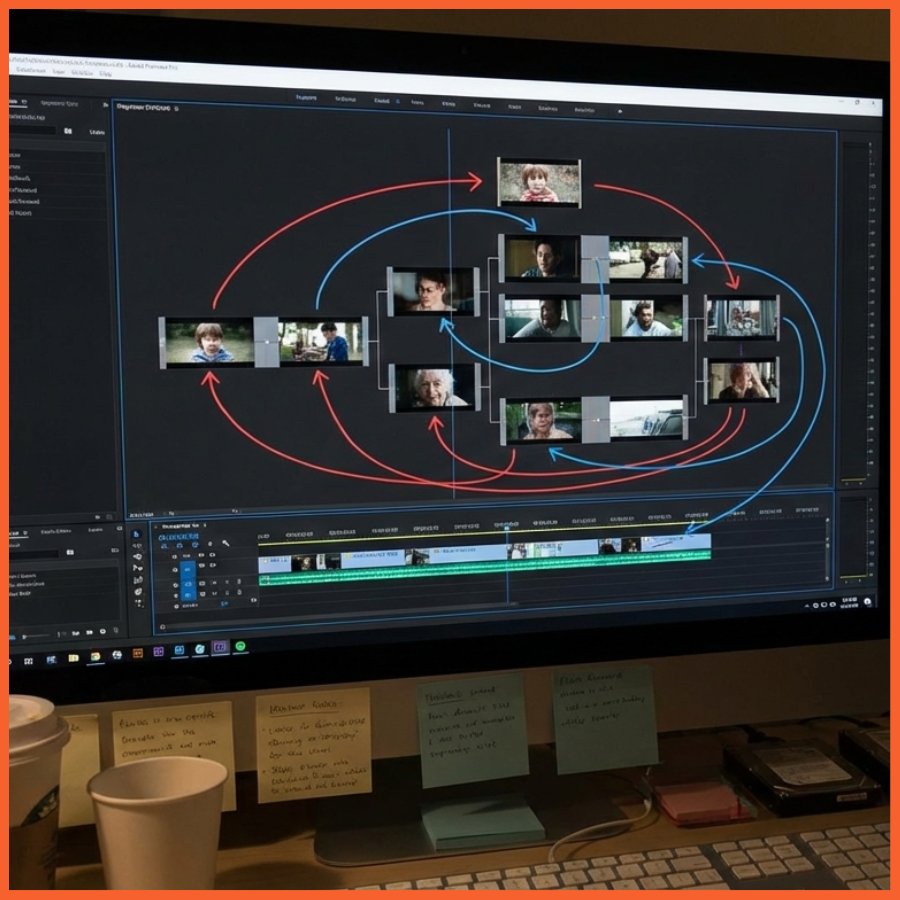
Strong flashbacks:
- Recontextualize a character’s behavior
- Contradict what we believed was true
- Expose emotional blind spots
- Reveal consequences—not causes
Example
Instead of flashing back to show what happened, flash back to show:
- What the character misunderstood
- What they avoided seeing
- What they chose not to feel at the time
This approach transforms flashbacks into dramatic turns, not narrative crutches.
🧠 Ask yourself:
What changes for the audience because of this flashback?
If the answer is “nothing,” rethink it.
4. Track Character Change Across Time, Not Just Events
Time jumps become powerful when they highlight transformation, not chronology.
Rather than focusing on what happened, focus on who the character was—and who they’ve become.
How to do this effectively:
- Mirror scenes across timelines (same situation, different choice)
- Contrast dialogue patterns or physicality
- Show how beliefs evolve—or calcify
- Highlight what’s gained and what’s lost
Why it works
The audience intuitively tracks character change, even when timelines shift.
You’re not asking them to follow dates—you’re asking them to follow identity.
🎭 Advanced technique:
Let the audience feel the difference before they consciously notice it. Subtle performance shifts often do more than overt plot markers.
5. Limit the Number of Time Rules—and Stick to Them
Innovation doesn’t mean chaos.
Even the most complex nonlinear films follow clear internal rules—they just don’t announce them.

Effective constraints include:
- Flashbacks only occur from one POV
- Time jumps triggered by specific sensory cues
- Past scenes always answer present questions
- Each return to the past escalates emotional stakes
The fewer rules you create, the easier it is for the audience to stay oriented.
🧩 Remember:
Clarity is not the enemy of sophistication. Confusion is.
If your audience is busy figuring out when they are, they stop caring about what happens next.
Common Pitfalls to Avoid
Before locking your structure, watch out for these red flags:
- ❌ Flashbacks that repeat known information
- ❌ Too many timelines competing for attention
- ❌ Time jumps used to “fix” weak scenes
- ❌ Exposition-heavy past scenes
- ❌ Visual cues that are inconsistent or unclear
Nonlinear storytelling should sharpen tension—not soften it.
Time as Character Evolution
At the Independent Film Arts Academy (IFAA), we teach that time is not just a narrative device—it’s a mirror for transformation.
Transformational Screenwriting focuses on:
- Character change as the spine of structure
- Emotional causality across timelines
- Meaningful repetition and contrast
- Story choices that reflect inner evolution
When flashbacks and time jumps are aligned with a character’s transformation, they stop feeling like devices—and start feeling inevitable.
If you want your nonlinear storytelling to feel purposeful, emotional, and cinematic, strengthen the transformation beneath the structure first.
📘 Transformational Screenwriting is available on Amazon and designed to help you craft stories where every moment—past or present—serves change, meaning, and emotional truth.📘 Discover more on Amazon:Transformational Screenwriting