
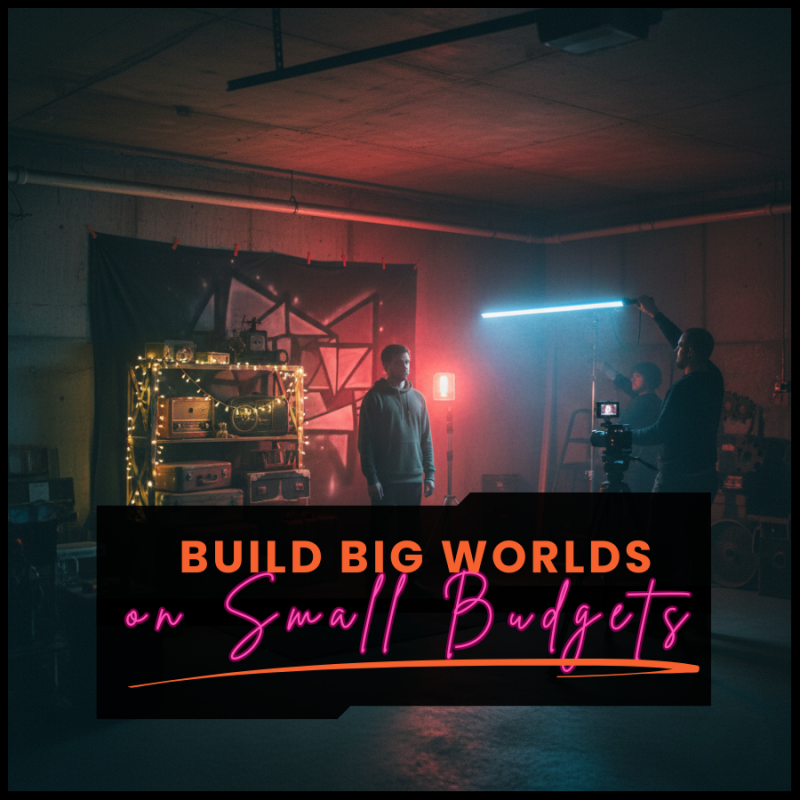
Building immersive worlds isn’t just for mega-budget franchises or VFX-heavy blockbusters. Indie filmmakers craft unforgettable universes all the time—using creativity, resourcefulness, and smart cinematic decisions instead of massive cash.
Whether you’re making sci-fi, period drama, fantasy, or a grounded contemporary story with heightened atmosphere, these 6 tips will help you create a world that feels rich, dimensional, and emotionally compelling—without draining your budget.
1. Start With World Rules
You don’t need to design every corner of your world. You need clarity.
Define the rules that make your world feel real:
- What is normal behavior in this world?
- What is forbidden, rare, or sacred?
- How do people speak, dress, or move?
- What is the social structure or hierarchy?
- What’s the worldview or shared belief system?
Clear rules guide your choices for locations, props, costumes, and performances. When the rules feel consistent, your world automatically feels bigger and more immersive—even if you only show a fraction of it.
2. Choose Locations
On a tight budget, the best worlds are found—not built.
Look for locations with natural personality:
- Old factories
- Artistic studios or exhibition spaces
- Forest trails, deserts, cliffs
- Vintage diners or abandoned buildings
- Community theaters
- University labs or tech floors
- Real houses with unusual architecture
A single well-chosen location can instantly tell the audience about tone, time period, class, culture, or genre.
Pro Tip: Prioritize locations with texture—brick walls, layered objects, unique lighting, or depth behind the subject. Texture = worldbuilding.
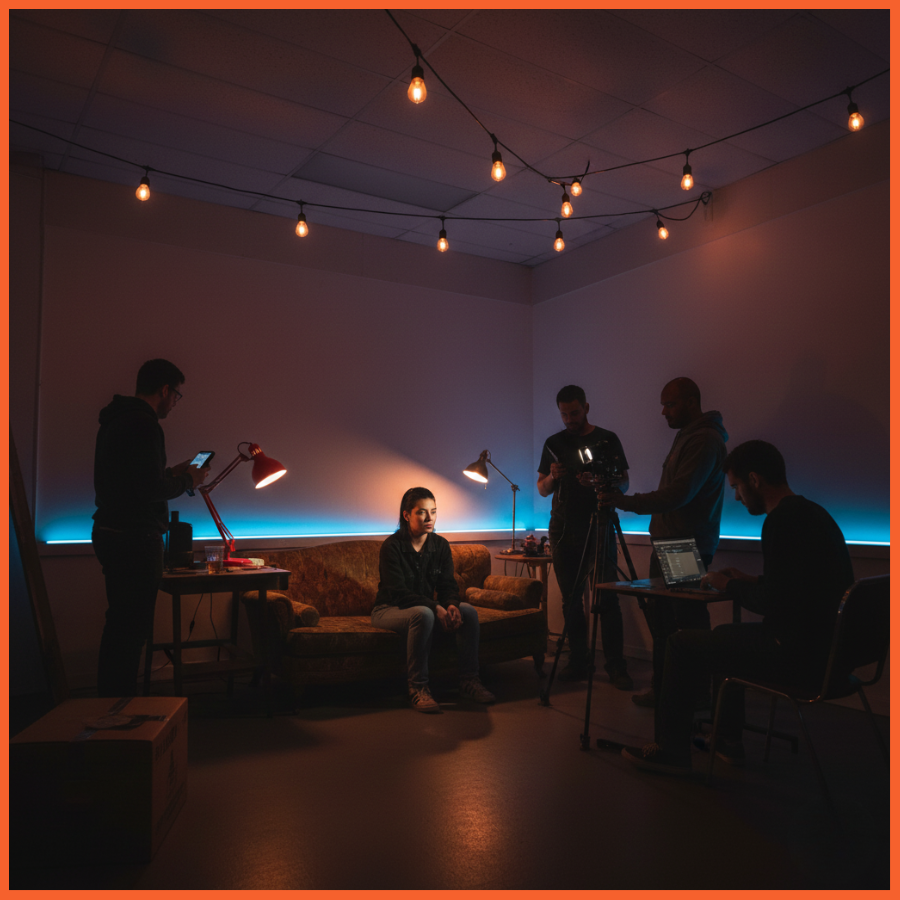
3. Use Practical Lighting
Lighting is the cheapest worldbuilding tool that most filmmakers underuse.
With practicals, you can:
- Suggest era (lanterns vs. neon)
- Indicate genre (moody blue sci-fi vs. warm fantasy glow)
- Shape class and culture (harsh fluorescent vs. soft lamps)
- Create spatial logic and depth
Even inexpensive bulb swaps or colored gels can completely shift the feeling of the environment.
Immersive doesn’t require expensive fixtures—just intentional lighting choices.
4. Repurpose Everyday Objects
The secret of smart worldbuilding? Reinvention.
With minimal budget, you can:
- Turn PVC pipes into futuristic conduits
- Use thrift-store items as props
- Repaint old furniture to match your world
- Combine Dollar Store LED lights with diffusion for sci-fi effects
- Print textures and mount them on foam boards
- Use metal grids, curtains, or fabric to create layers
Create focal points instead of large-scale builds. Audiences fill in the rest.
A strategic prop or surface texture can imply an entire universe.

5. Expand the World
Sound is your invisible production designer.
With thoughtful soundscapes, you can suggest:
- City scale
- Population density
- Technology level
- Weather
- Cultural rituals
- Creatures or machines we never see
Layering ambiences, distant sounds, textures, and movement builds a world larger than your budget can show visually.
Remember: If the audience hears the world, they believe in it.
6. Ground Characters in the World
Costume choices help define class, culture, role, and emotional state—fast.

You don’t need custom builds. You need curated looks.
Try:
- Thrifted pieces altered slightly for uniqueness
- Simple modifications (dye, distressing, patching)
- Repetition of certain colors or textures
- Accessories that hint at history or daily habits
- Uniform-like elements for groups or factions
When characters look like they belong to the world, the film feels cohesive—even if the sets are minimal.
Build Worlds From the Inside Out
The strongest worlds begin on the page.
When a script is emotionally grounded—with clear internal logic, vivid character motivations, and thematic depth—the world becomes easier to execute, even on a limited budget.
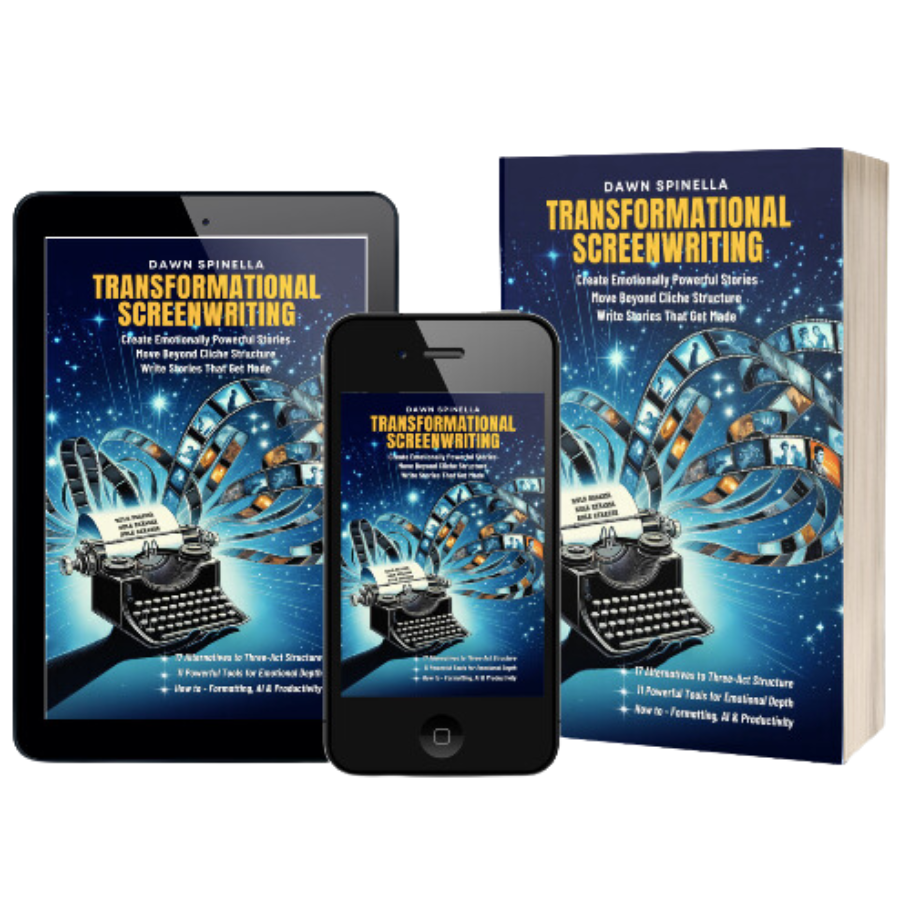
Transformational Screenwriting focuses on building narratives where character evolution shapes the world and vice versa. This approach ensures your world isn’t just visually immersive—it’s emotionally meaningful.
A strong story foundation reduces production waste, sharpens creative choices, and helps your low-budget world feel cinematic on every level.📘 Discover more on Amazon:Transformational Screenwriting