

Every unforgettable film is built on a question that lingers in the audience’s mind long after the credits roll. This central question—sometimes called the dramatic question—anchors the narrative, shapes character choices, and drives emotional momentum from the opening scene to the final frame.
For indie filmmakers and screenwriters, structuring a script around a powerful central question is one of the most effective ways to create clarity, tension, and meaning without relying on large budgets or spectacle. When your story is guided by a compelling question, every scene feels purposeful, every conflict feels necessary, and every emotional turn resonates more deeply.
In this guide, we’ll explore how to craft, strengthen, and structure your screenplay around a central question that keeps audiences invested from beginning to end.
Why the Central Question Matters in Screenwriting
A strong central question does more than create curiosity—it provides narrative gravity. It:
- Unifies the story so every subplot supports the main emotional journey.
- Creates tension by delaying the answer until the climax.
- Guides character decisions under pressure and conflict.
- Delivers thematic meaning through the final resolution.
Think of films where the story revolves around a single driving uncertainty:
- Will the hero forgive themselves?
- Can love survive betrayal?
- Is redemption truly possible?
When the audience subconsciously tracks this question, engagement becomes automatic.
1. Identify the Emotional Core of Your Story
Before writing plot points or set pieces, ask:
What emotional struggle is this story really about?
The central question should emerge from inner conflict, not just external goals. Compare the difference:
- Weak: Will she win the competition?
- Strong: Is she worthy of being seen?
External stakes create excitement. Emotional stakes create meaning.
To uncover the emotional core:
- Examine your protagonist’s deepest fear.
- Identify the belief holding them back.
- Connect the plot goal to an inner transformation.
Your central question lives at the intersection of these elements.
2. Phrase the Question for Maximum Tension

Not all dramatic questions are equally powerful. The strongest ones are:
- Emotionally charged rather than purely physical.
- Difficult to answer until the climax.
- Tied to transformation, not just success or failure.
Examples of effective phrasing:
- Can he learn to trust again before he loses everything?
- Will she choose truth over safety?
- Is freedom possible without sacrifice?
Avoid yes/no questions that feel superficial. Instead, craft questions that imply cost, change, and consequence.
3. Introduce the Central Question Early
The audience should sense the central question within the first act—often by the inciting incident.
This doesn’t mean stating it directly in dialogue. Instead, reveal it through:
- A defining choice the protagonist avoids.
- A wound or trauma hinted at visually.
- A relationship dynamic filled with unresolved tension.
When introduced early, the question becomes the invisible thread pulling viewers through the narrative.
4. Build Every Major Plot Turn Around the Question

Once established, the central question must shape structure:
Act One
- Presents the emotional problem.
- Frames the question without answering it.
Act Two
- Tests the protagonist through escalating conflicts.
- Forces partial, temporary, or false answers.
- Raises the emotional cost of failure.
Act Three
- Confronts the question directly.
- Requires irreversible choice or sacrifice.
- Reveals the true thematic answer.
If a scene doesn’t pressure the central question, it likely doesn’t belong in the script.
5. Let Character Arcs Answer the Question—Not Dialogue
The resolution should be felt, not explained.
Instead of telling the audience the answer, show it through:
- A final decision that contrasts the opening behavior.
- A visual action proving inner change.
- A relationship transformed by growth or loss.
For example:
- Opening: A character runs from vulnerability.
- Ending: They risk honesty despite possible rejection.
The behavior becomes the answer.
6. Use Subplots to Reflect Different Possible Answers
Great scripts echo the central question through supporting characters:
- One character represents fear.
- Another represents hope.
- Another shows the cost of refusing change.
These mirrors deepen theme without heavy exposition and make the final resolution feel inevitable rather than convenient.
7. Deliver a Resolution That Feels Both Surprising and Inevitable
The most satisfying endings do two things at once:
- Surprise the audience with the specific outcome.
- Feel inevitable based on the emotional journey.
This balance happens when the protagonist’s final choice:
- Directly answers the central question.
- Reflects authentic transformation.
- Carries meaningful consequence.
A powerful ending doesn’t just resolve plot—it resolves emotion.
Common Mistakes to Avoid
Even strong concepts can lose impact if the central question is mishandled:
- Too vague: The audience can’t track emotional stakes.
- Too obvious: The ending feels predictable.
- Introduced too late: Momentum never forms.
- Unanswered: The story feels incomplete.
Clarity of question leads to clarity of structure.
Let the Question Lead the Story
When you structure your screenplay around a powerful central question, storytelling becomes more focused, emotional, and cinematic. You no longer rely on spectacle to hold attention—meaning itself creates momentum.
For indie filmmakers especially, this approach is transformative. A clear emotional question can elevate a micro‑budget film into a deeply resonant audience experience.
Before writing your next script, ask yourself one thing:
What question will keep the audience emotionally invested until the final frame?
Start there—and let everything else grow from it.
Transformational Screenwriting
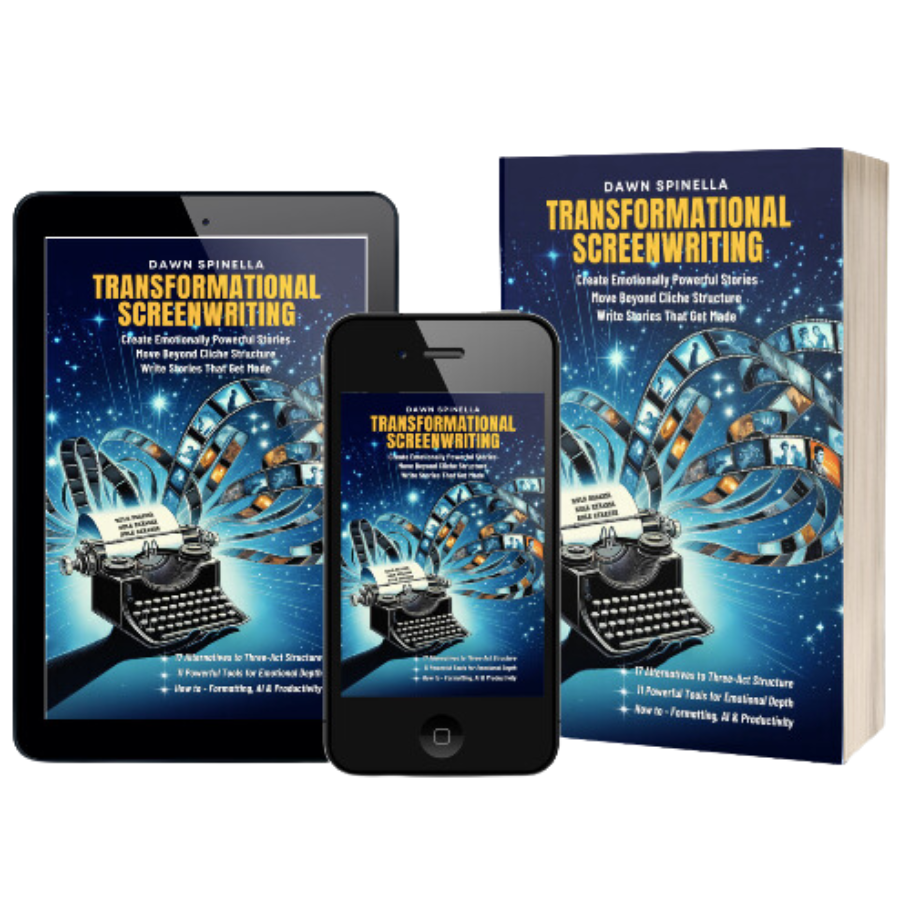
Great storytelling isn’t accidental—it’s designed. Transformational Screenwriting explores how emotional architecture, character change, and thematic clarity work together to create unforgettable cinematic journeys.
If you’re ready to deepen your storytelling craft, this resource will guide you through the principles that turn simple plots into meaningful, audience‑moving experiences.Your next screenplay doesn’t just need structure. It needs transformation.