

When it comes to selling your indie film, your pitch deck isn’t just a presentation—it’s your first impression. A well-crafted deck can make the difference between a polite “We’ll think about it” and a confident “Let’s talk more.”
Here’s how to create a pitch deck that commands attention, builds excitement, and gets a “yes” from producers and investors.
1. Start with a Strong Hook
The first slide should grab attention instantly. Producers see hundreds of decks—yours needs to stand out.
🎬 What to include:
- A powerful logline (one sentence that captures your film’s essence)
- A striking key image or poster mockup
- A short, emotionally resonant tagline
Think of this as your film’s trailer in one slide—visually bold, emotionally charged, and impossible to ignore.
2. Introduce the Core Concept Clearly
After the hook, outline your concept in a way that’s both simple and cinematic.
✨ Keep it concise: one to two paragraphs max.
✅ Include:
- Genre and tone
- Central conflict and emotional stakes
- The “why now” factor—why your story matters today
If your idea can’t be understood in under a minute, simplify. Clarity sells faster than complexity.

3. Showcase Compelling Characters
Characters are the heart of your story—and often the key to selling your project.
👥 Highlight:
- The protagonist’s core goal and internal struggle
- The antagonist or opposing force
- A few key supporting roles
Use brief, cinematic language. For example:
“Lena, a burned-out paramedic, risks everything to uncover the truth behind her sister’s disappearance.”
This gives producers a clear sense of who to root for—and which actors might fit the role.
4. Create a Visual Tone Section
Film is a visual medium, so your deck should look like your movie feels.
🎨 Include reference stills, concept art, or color palettes that match your intended tone.
- Use 3–5 reference images per section.
- Choose consistent fonts and layout.
- Avoid generic stock images that dilute your mood.
This section tells your story visually—without words.

5. Clarify Your Vision as a Director
Producers invest in directors with vision and clarity.
🎥 Share a brief Director’s Statement (no more than 200 words):
- Why you’re passionate about the project
- What themes drive the story
- What audiences should feel walking out of the theater
This personal touch helps producers connect with you, not just the script.
6. Include a Realistic Budget & Funding Plan
Money talk matters. Even indie producers want to know how you’ll spend wisely.
💰 Outline:
- Estimated total budget (and how it breaks down—e.g., 60% production, 20% post)
- Current funding status
- What you’re seeking (investment, co-production, or partnership)
Transparency builds trust and shows you understand the business side of filmmaking.
7. End with a Call to Action
Wrap up with a strong, professional close.
🚀 Include:
- Contact information and website
- A thank-you note for their time
- A clear next step (“We’d love to discuss potential collaboration” or “Full script available upon request”)
Confidence—not desperation—sells.
A strong pitch deck is usually 10–12 slides max.
Make every slide visual, focused, and emotionally resonant. If you can evoke curiosity and excitement, producers will ask for more—and that’s when the real conversation begins.
Transformational Screenwriting: Build a Story That Sells Itself
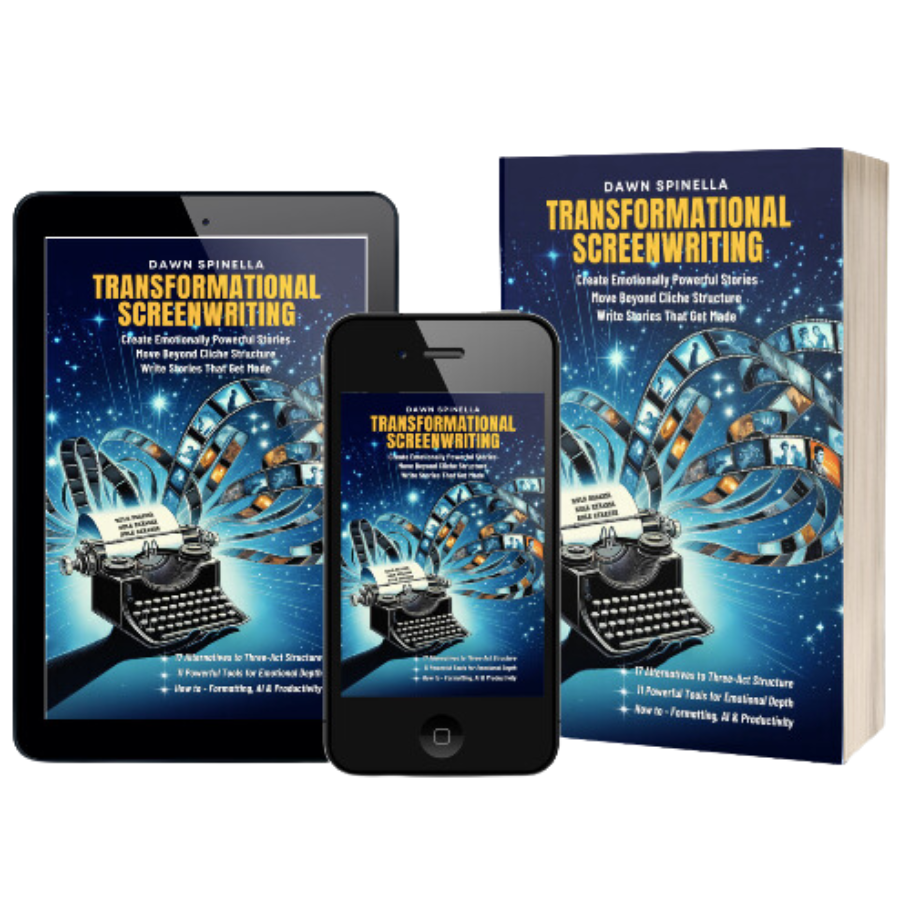
At the heart of every great pitch is a powerful story. Transformational Screenwriting teaches you how to craft scripts that not only entertain but also inspire and connect deeply with audiences.
📘 **Discover techniques that elevate your storytelling—**from emotional resonance to character transformation—so your next pitch deck doesn’t just get noticed… it gets funded.
👉 Get your copy on Amazon today.